Arlo
71 sign-ups at $7.05 each, and a new ad that brought them in 28% cheaper
Arlo is a food friend you text, newly launched in Denver, with no ad history, no proven message and a small test budget. Alt Labs brought me in to find the creative angle that gets locals to sign up. I built the ads, then turned a 10-ad scatter into a fair, controlled test.
- Client
- Arlo, an SMS food discovery service, through Alt Labs
- What I did
- Strategy, video ads, campaign setup, testing and reporting
- Platforms
- Facebook and Instagram, Reels and Feed
- Timeline
- October to November 2026, two sprints
Across both sprints
sign-ups from $500.61 in ad spend
blended cost per sign-up
cheaper sign-ups from the best new ad vs the control
per sign-up on the best ad, under an equal budget
A new app with nothing proven yet
Arlo was a new product with no ad history, no proven message and a small budget. Three things made that hard.
No one knew which story sells it
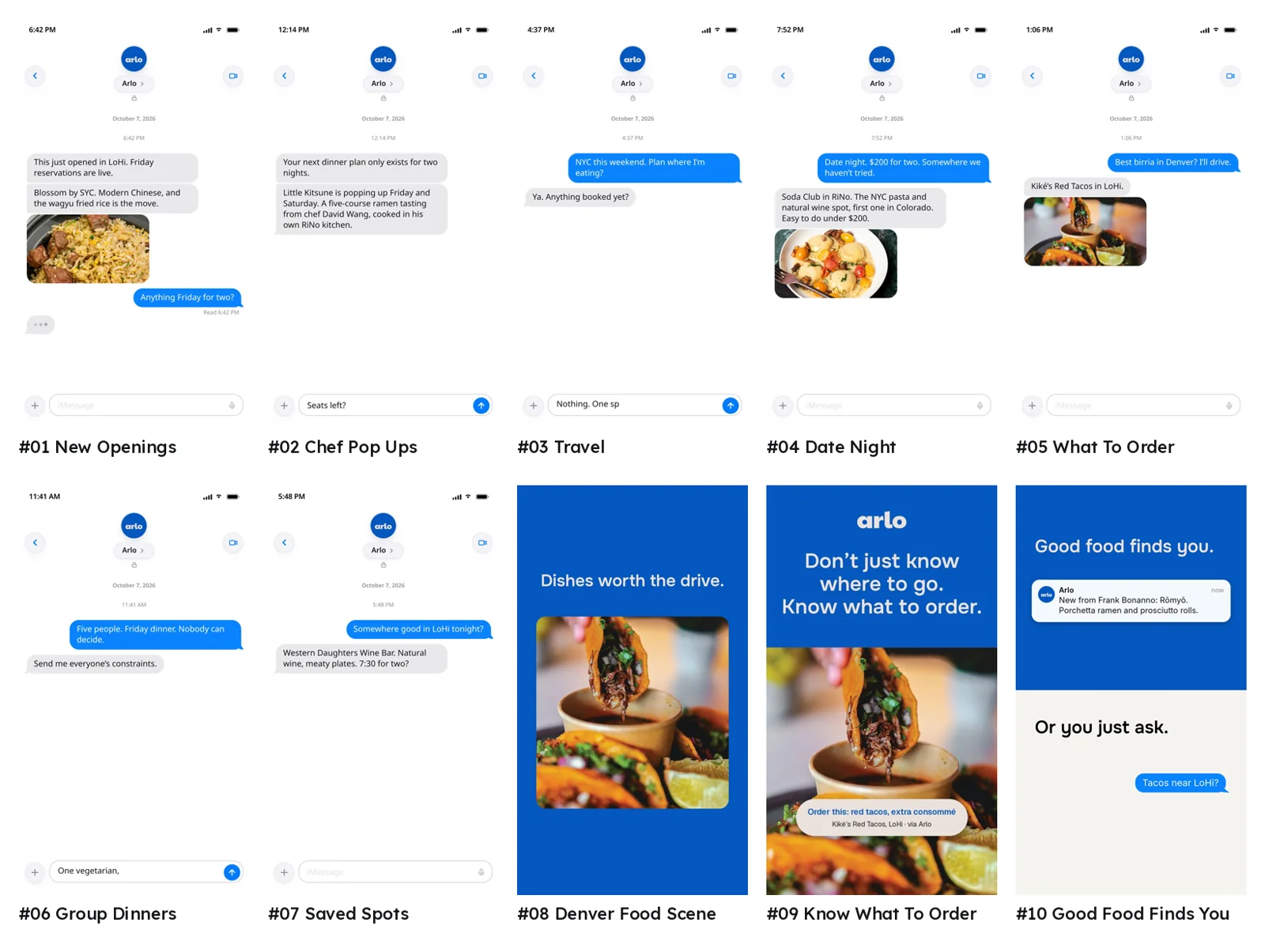
Arlo does several jobs: new openings, date night picks, group dinners, what to order. Each one is a different ad, and nobody knew which would land.
The algorithm decides small budgets
With one budget shared across many ads, Meta picks one or two early winners and starves the rest before they get a fair look.
The product is invisible
Arlo is a text thread. There is no app screen to show, so the ads had to make texting a friend about food feel real and appetising in a few seconds.
Go wide, then make it a fair test
Two sprints: first see what Meta does with ten ideas, then give the strongest ones an equal budget and a winning rule written before launch.
Go wide with ten use cases
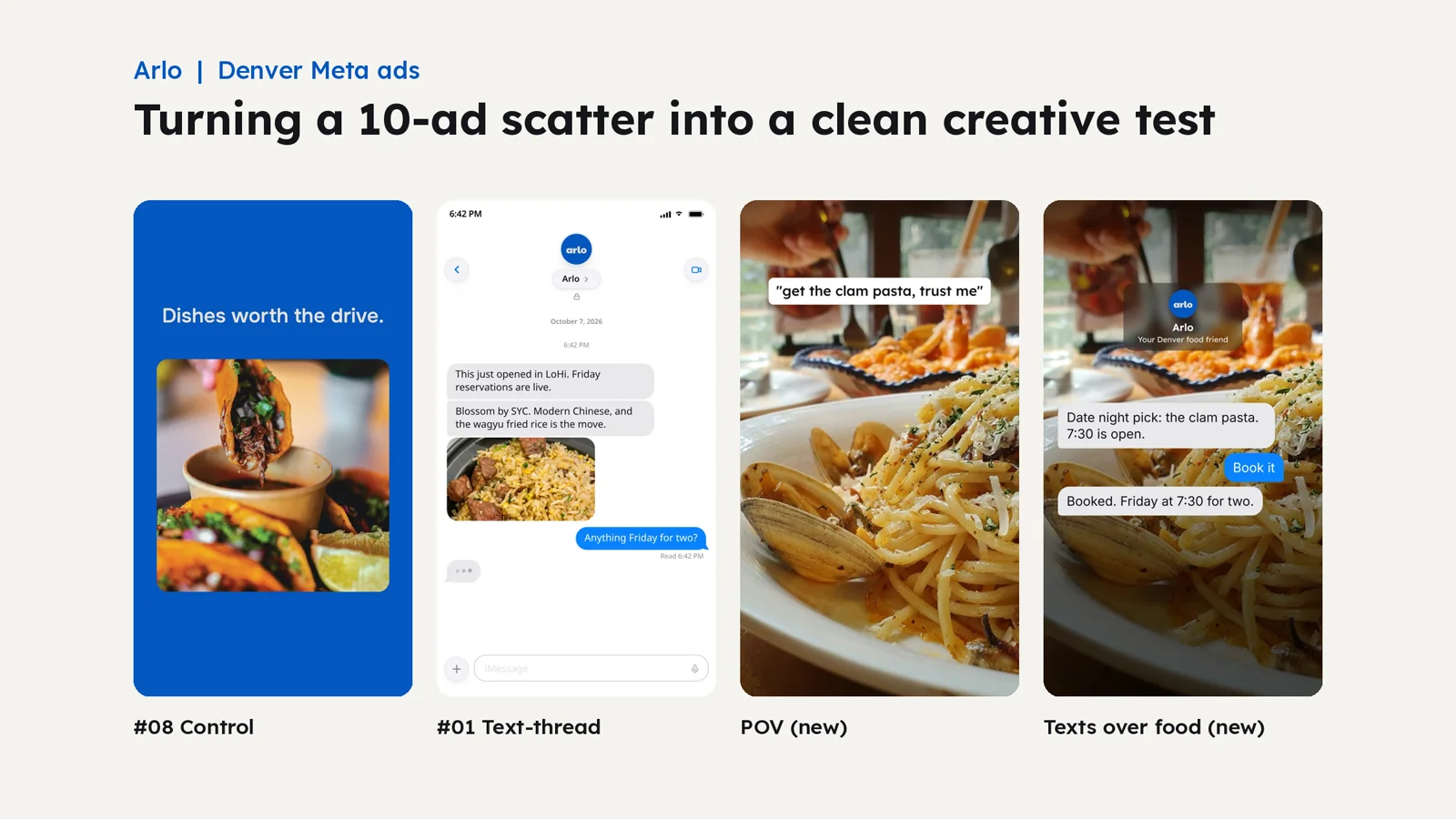
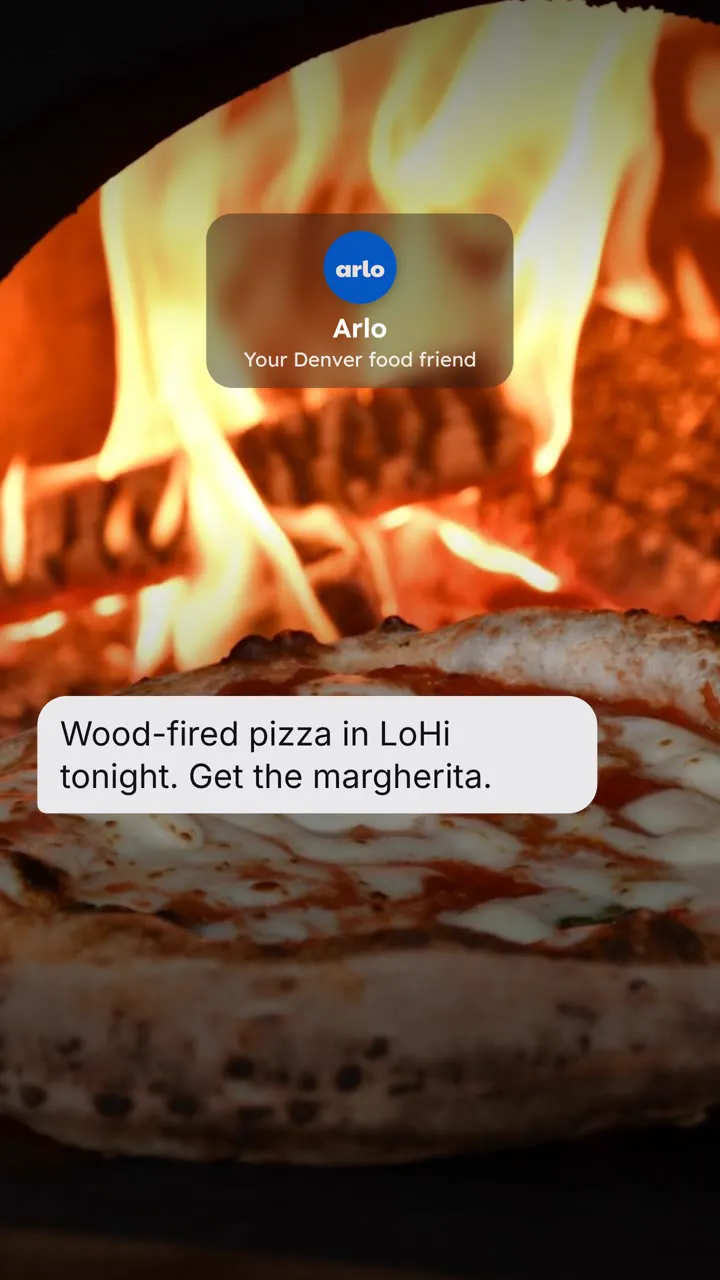
In Sprint 1 (15 to 25 October) I scripted, designed and built 10 vertical video ads, each built around one use case. Seven looked like a real iMessage conversation with Arlo, one was a food montage (#08, 'Dishes worth the drive') and two were brand cards.
Build the ads in code
Every ad was an HTML/JS scene rendered frame by frame, captured at 1080x1920 and encoded with ffmpeg. I could change a line of copy or a dish photo and rebuild all ten in minutes, with text kept inside the Reels safe zones.
Read the result honestly
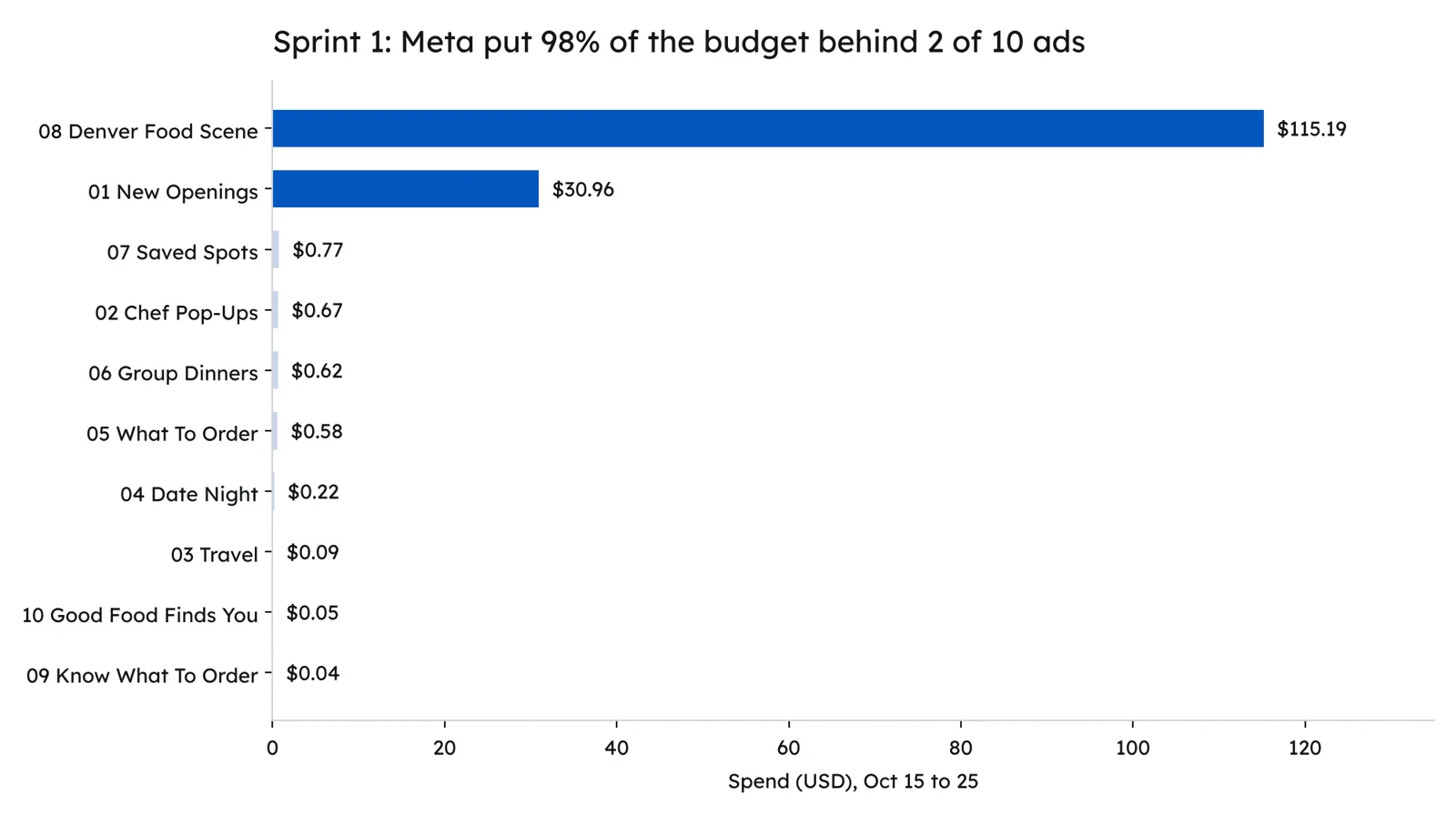
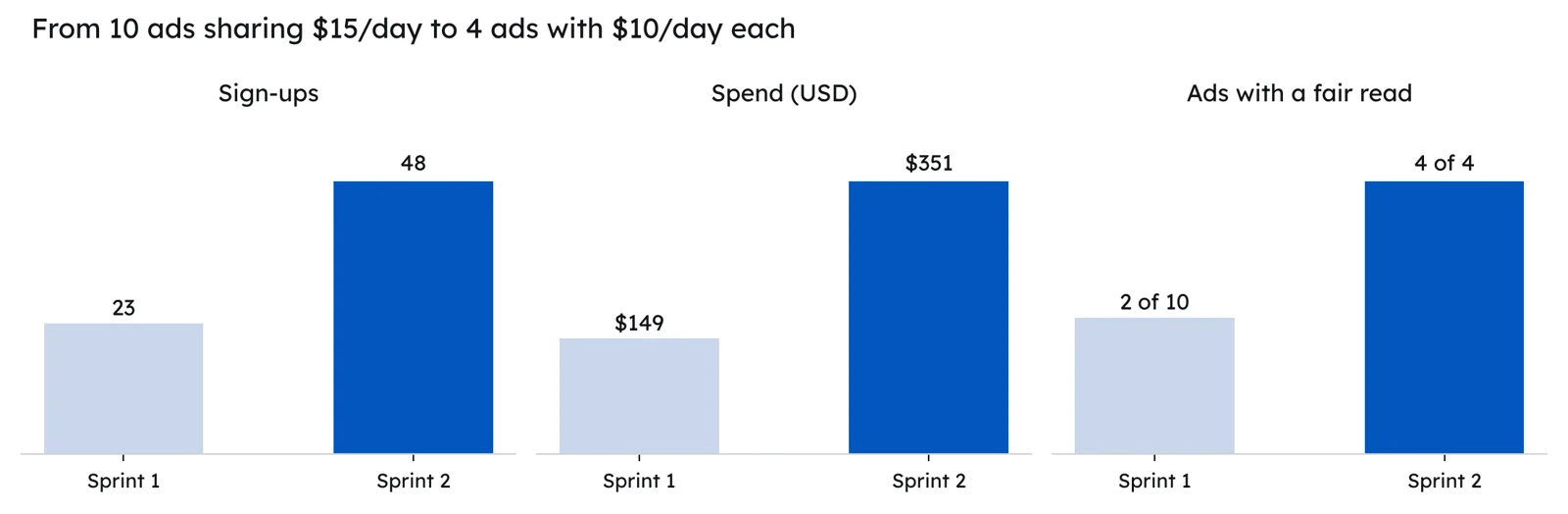
Meta put 98% of the budget behind two ads. #08 took $115.19 and delivered 19 of the 23 sign-ups at $6.06 each. The topline looked fine at $6.49 per sign-up, but I told the client it did not tell us much: eight ideas never got a real test.
Cut to four ads, one budget each
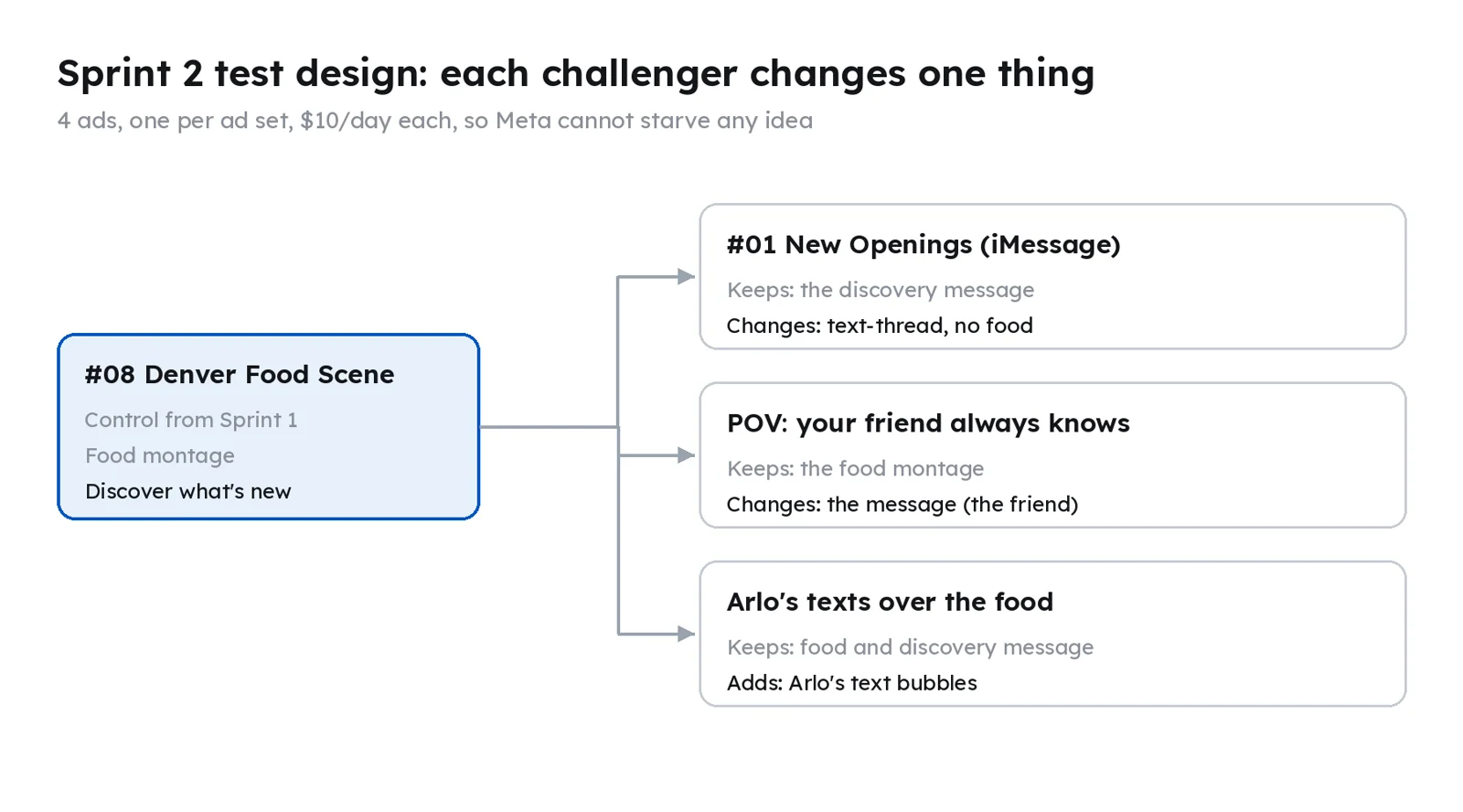
For Sprint 2 (28 October to 6 November) I cut from 10 ads to 4 and gave each its own ad set at $10 a day, so Meta could not starve any of them. Each challenger changed one thing against the Sprint 1 winner, which stayed in unchanged as the control.
Write the winning rule before launch
A challenger needed at least 10 sign-ups and a cost per sign-up at least 40% below the control. Anything closer counted as a tie. Writing it down first meant nobody could move the goalposts afterwards.
Launch, check once, leave it alone
Both new ads got original background music, with audio levelled for mobile. I checked in at day 5 to confirm delivery was even and the sign-ups were real click-through conversions, then let the test run to the end with no mid-flight changes.
The ads, up close
Both new Sprint 2 ads kept the food front and centre. The control is the Sprint 1 winner they had to beat.
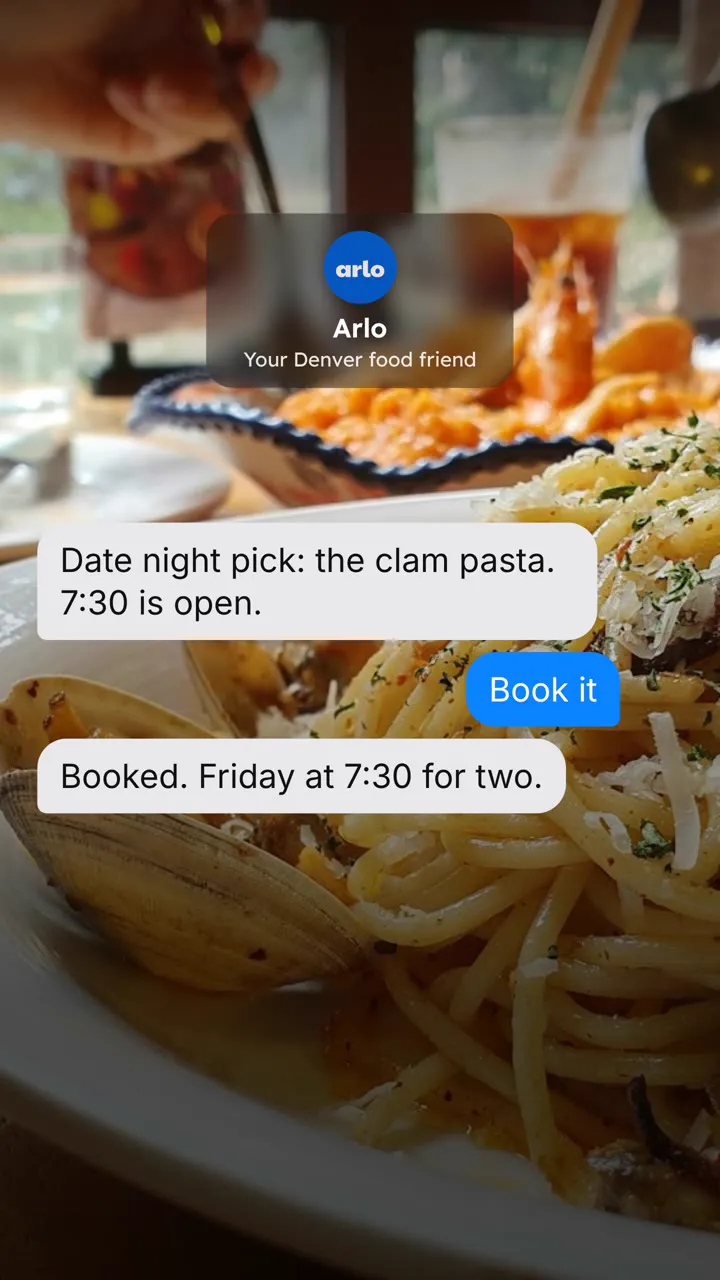
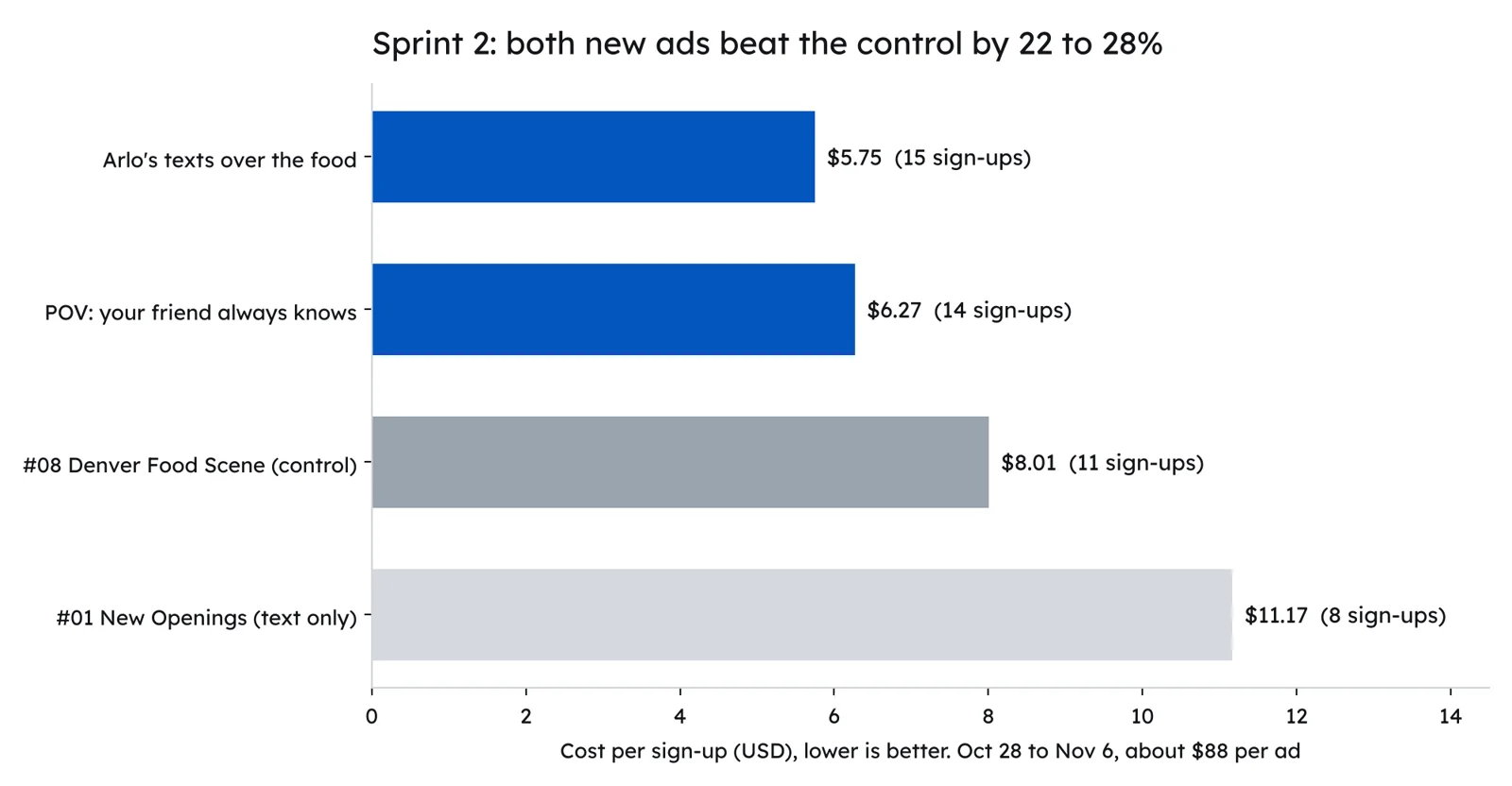
Arlo's texts over the foodThe best performer: 15 sign-ups at $5.75 each, 28% cheaper than the control.
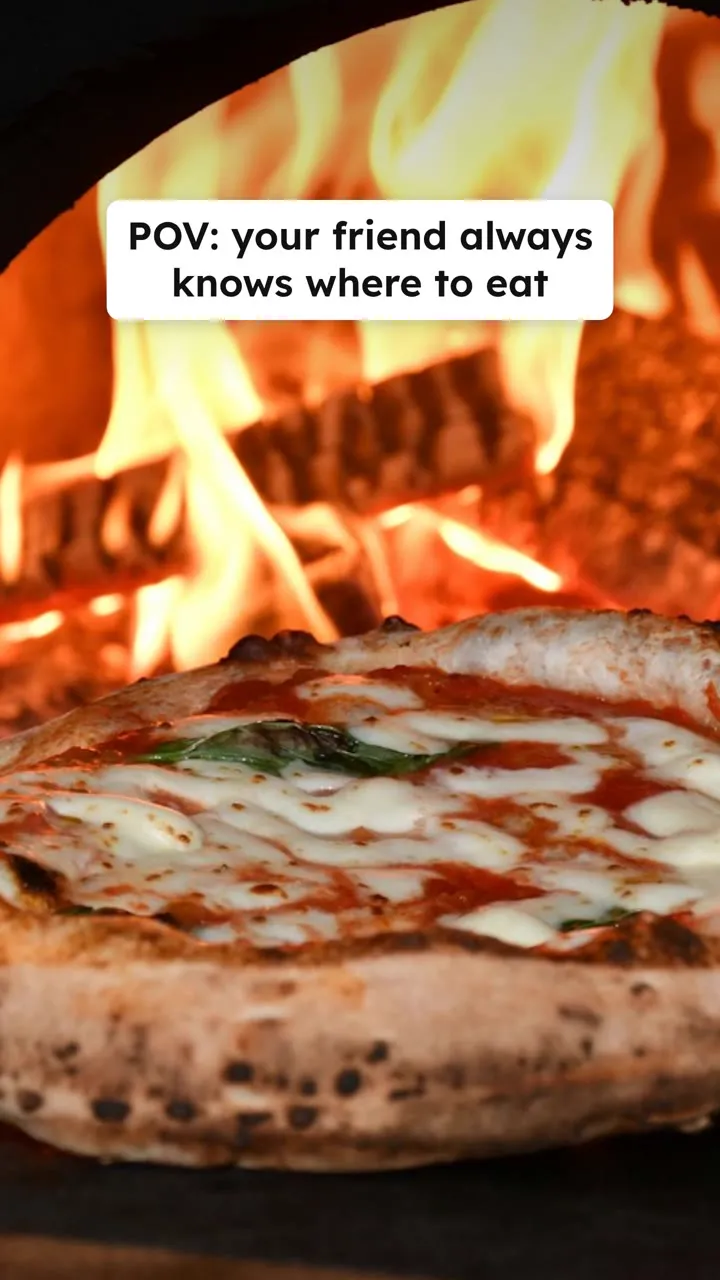
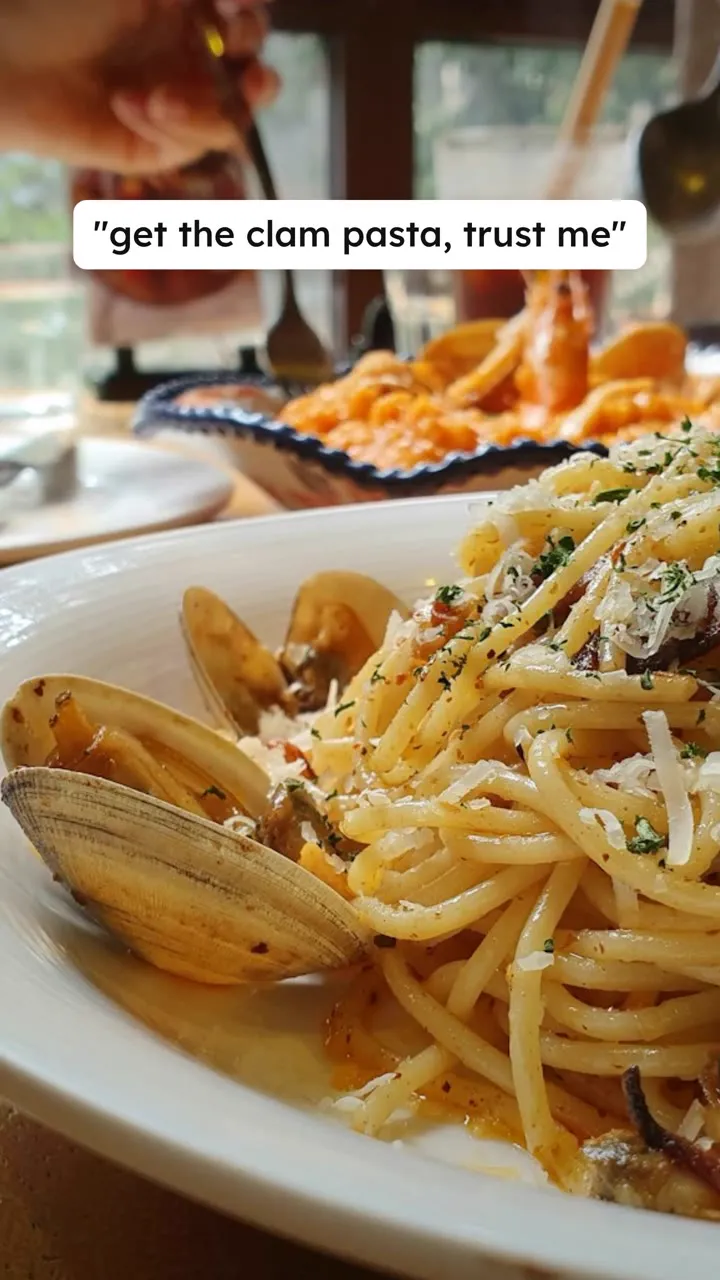
POV: your friend always knowsThe friend who always knows where to eat turns out to be Arlo. 14 sign-ups at $6.27 each.
#08 Denver Food Scene, the controlThe Sprint 1 winner. Under an equal budget in Sprint 2 it cost $8.01 per sign-up.
Sprint 2: the two new concepts
POV opens on the friend who always knows. Texts over the food puts Arlo's replies on the dish and ends with a booking.
Both new ads beat the control
Under equal budgets, the two new concepts brought sign-ups in 22 to 28% cheaper than the best Sprint 1 ad. The text-only ad cost 39% more.
Sprint 2, on $351.42 of ad spend
sign-ups across four ads
ads got a fair read, up from 2 of 10
cheaper sign-ups from the two new ads
more per sign-up for the text-only ad
Sprint 2 results by ad
| Ad | Spend | Impressions | Clicks | CTR | Sign-ups | Cost per sign-up | vs control |
|---|---|---|---|---|---|---|---|
| Arlo's texts over the food (new) | $86.18 | 1,593 | 55 | 3.45% | 15 | $5.75 | 28% cheaper |
| POV: your friend always knows (new) | $87.80 | 1,527 | 62 | 4.06% | 14 | $6.27 | 22% cheaper |
| #08 Denver Food Scene (control) | $88.11 | 1,424 | 51 | 3.58% | 11 | $8.01 | Control |
| #01 New Openings (text only) | $89.33 | 1,499 | 48 | 3.20% | 8 | $11.17 | 39% more expensive |
| Total | $351.42 | 6,043 | 216 | 3.57% | 48 | $7.32 |
Both new ads beat the control, but neither cleared the 40% bar set before launch, so this is a strong signal rather than a final verdict. POV versus texts was close enough to call a tie.
Source: Meta Ads Manager, 7-day click attribution, sign-ups tracked as CompleteRegistration on the Meta pixel. Sprint 1 ran 15 to 25 October 2026; Sprint 2 ran 28 October to 6 November 2026.
What this means for your app
Show the food, then the product
In both sprints, ads with real food imagery beat text-only ads. The best ad paired appetising footage with Arlo's real replies, so viewers saw the reward and how they get it.
On a small budget, control the auction
One shared budget lets Meta pick a winner before most ideas get a look. Giving each idea its own ad set turned a one-sided Sprint 1 into a fair comparison.
Be honest about the read
The new ads had music while the control did not, so part of the lift may come from sound. Sprint 3 puts music on the control, reruns the two new ads and tests a hybrid of the two.
More work
 EcommerceCelestial Hair Co.Founder-led video and Meta ads that introduced a new luxury hair brand.View case study
 Wellness & coachingShe EmpowHersInstagram strategy, paid social and community for a women's growth app.View case study
Personal brandsStephanie PiccirelliRepositioning a senior OEM alliances leader through LinkedIn thought leadership.View case study
Want results like this for your brand?
Book a free 30-minute call. We'll look at where your social media is today and what the first 90 days could look like.